Thoughts on Evidence-Based Design

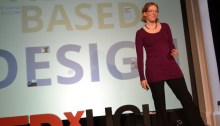
I have recently thought a lot about evidence-based design and wanted to share some of these thoughts here. Doing things in an evidence-based way means systematically considering results from rigorous research when taking decisions in any professional practice: medicine, design, management, HR, education, policy and governance. It is meant to improve outcomes: better treatments and…
On Architectural Photography. Or: Where are all the people?

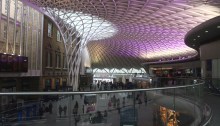
I cannot remember when it was or in which context exactly. But some time ago, somewhere, somehow, someone mentioned to me how odd it is that architecture is always photographed and presented under certain conditions: 1) perfect weather, i.e. blue skies, or alternatively: 2) at night or dawn, 3) no trace of usage, 4) no…

Building temples for atheists? Reflections on a new building type

Alain de Botton’s latest book “Religion for Atheists” was published this week alongside a big media campaign with graphically stunning posters and the seemingly simple question ‘Even if religion isn’t true, can’t we enjoy the best bits? What I find interesting is the connection of a philosophical and maybe political question to an architectural statement.…

Westminster as a Workplace

As part of ‘Workplace Week‘ I had the rare opportunity to visit Westminster Palace and see it through the eyes of a Facilities Manager, which was highly fascinating and intriguing. Andrew, Head of Facilities for the Parliamentary Estate guided us through Portcullis House, the building on the Embankment, where all MP’s have their offices, and…

What makes a school a school, a church a church and a shop a shop? Thoughts on building typology.

Inspired by the start of term at UCL, a new great cohort of students to teach and interact with, and the new module that I teach (‘Buildings, Organisations, Networks’ in the MSc ‘Advanced Architectural Studies’ – now called ‘Spatial Design: Architecture and Cities’), I have recently thought a lot about building typologies. So in essence,…

Inside the Gherkin – On top of the World?

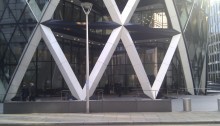
Last week I had the unexpected chance to get myself inside one of London’s most iconic buildings: 30 St Mary Axe, Headquarter of Swiss Re, also known as the ‘Gherkin’. Built by Norman Foster at the turn of the century using parametric design and thus a novel technological approach, this building has seen both praise…

London Open House 2: The Bridge Academy

Schools are interesting as a building type for a variety of reasons: they have a clear function, i.e. accommodating children and organising teaching and learning; there are clear temporal patterns in usage and stark differences between classroom activities and the times before, after and in between; and the interface of schools is complex, too, in…